Jools Sweeney, Jools' Law and Why Ellen Roome Is Fighting Every Parent's Fight
The inquest into 14-year-old Jools Sweeney's death lasted 23 minutes. His mother refused to accept it. Why her fight for access to children's online data matters to every family.
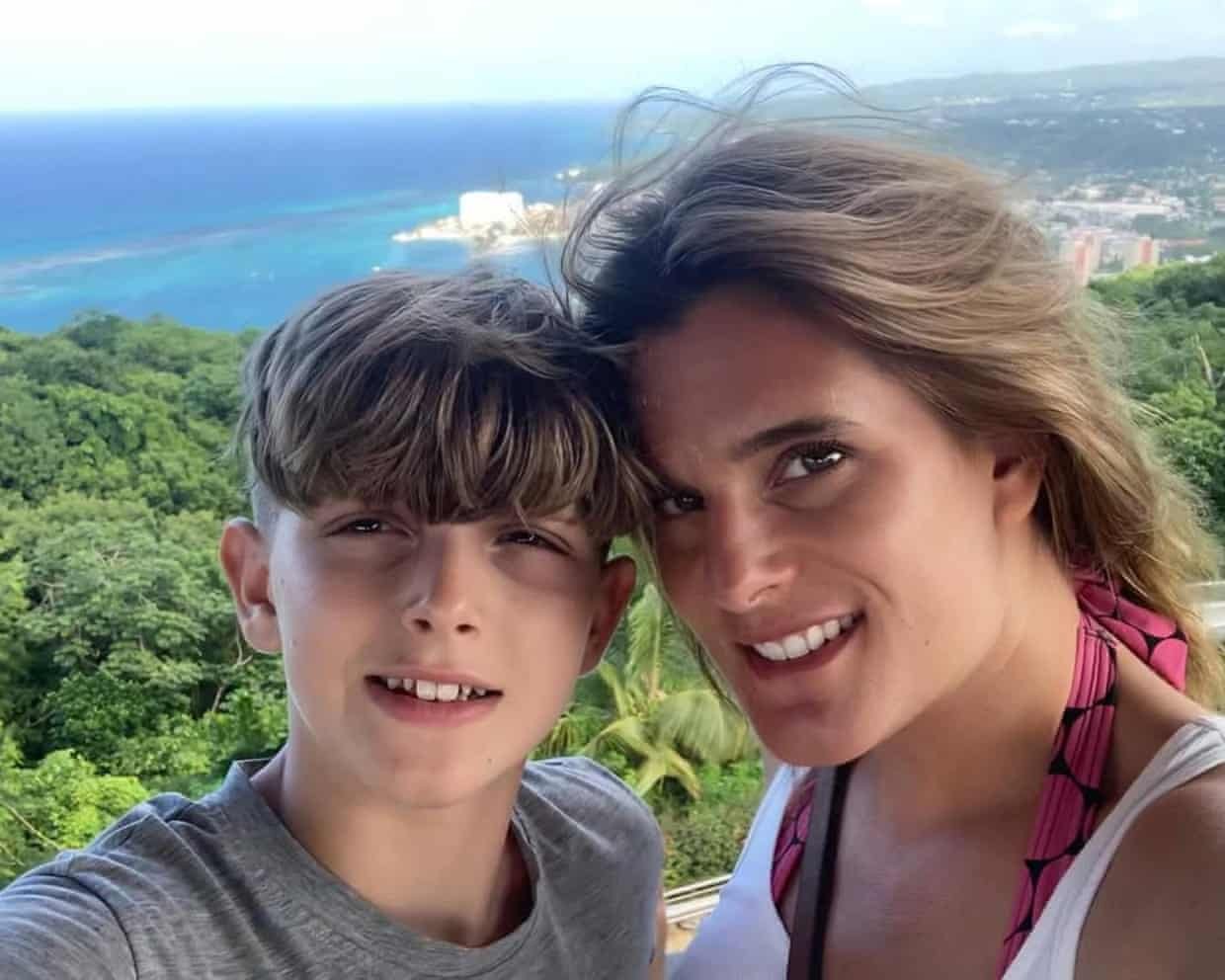
Cover photo: Ellen Roome with her son Jools Sweeney. Photograph: Ellen Roome/PA, as published by The Guardian.
A founder's note
As a mum, reading Ellen Roome's story doesn't just break my heart. It makes me angry. No parent should have to spend years fighting a technology company to understand what their child saw in the weeks before they died. When I started building Young Minds App, I knew blocking and timers would never be enough on their own. What felt essential to me was teaching children how grooming, manipulation, peer pressure and viral "challenges" actually work, so they can recognise them when no adult is in the room. Ellen is fighting for the parents who come after her. I think every one of us should be standing beside her.
Jools Sweeney was 14. By his family's account he was a happy, fun-loving, popular boy who spent his last day, 13 April 2022, playing football and walking to a lake with friends in Cheltenham during the Easter holidays. That evening he died. His mother, Ellen Roome, believes he may have been taking part in an online "blackout challenge" that had circulated on social media. Four years later, she is still looking for answers, and in July 2026 the High Court agreed that she deserved a proper chance to find them.
Quick summary
- The original inquest in September 2022 lasted 23 minutes, called no live evidence and did not examine Jools' social media data.
- On 16 July 2026, the High Court quashed that conclusion and ordered a fresh inquest. It is believed to be the first in England and Wales ordered specifically so a child's social media and device data can be properly examined.
- The coroner and TikTok did not oppose the application.
- Ellen is campaigning for "Jools' Law": a requirement that tech companies preserve a child's online data quickly after their death, so it isn't lost before families and coroners can see it.
What happened after Jools died
When a child dies suddenly, parents naturally want to understand why. For Ellen, that meant asking what Jools had been watching, searching and sharing. But his accounts were locked. Platforms cited privacy rules, and without a court order or legal route, the data that might have explained his final hours stayed out of reach.
The inquest that followed was short. According to the BBC, it lasted 23 minutes and returned a narrative conclusion without hearing live evidence. For a family still searching for the truth, that was not an ending. It was a door being closed.
The High Court ruling
Ellen did not give up. With permission from the Attorney General in March 2026, she challenged the Gloucestershire coroner's conclusion. Her lawyers told the court that new evidence had come to light about the possible role of social media, and that several lines of inquiry "bear directly upon TikTok's platform and the data it holds", as reported by ITV News.
Lord Justice Warby, sitting with Mrs Justice Heather Williams, granted the application, saying it was "desirable in the interests of justice for a new inquest to be held." Importantly, the judges did not say what the new inquest will conclude. That is for the coroner to decide once the evidence has been properly examined. As The Guardian reported, the ruling allows previously omitted social media evidence to be considered.
"I always said that if I could try and make something positive out of the loss of Jools' life then I would."
Ellen Roome, speaking to BBC Breakfast
What is Jools' Law?
Jools' Law is the name of Ellen's campaign to make technology companies preserve a child's online data soon after their death, so it can't be deleted or lost while families and coroners are still asking questions. Since Jools died, the law has moved. The Online Safety Act 2023 gives Ofcom powers to request information from platforms in cases involving a child's death, and the Data (Use and Access) Act 2025 adds routes for coroners to secure that data. Ellen has said she intends to use these routes to request Jools' content through the coroner.
These changes did not happen by themselves. They happened because bereaved parents like Ellen, alongside others such as Ian Russell after the death of his daughter Molly, refused to stay quiet.
Why every parent should care
It is tempting to read a story like this and think, "That wouldn't happen to my child." Ellen would tell you she thought the same. Jools was not a troubled loner. He was a sociable boy with friends and a loving family. That is exactly why this matters to all of us:
- Algorithms don't know your child. Feeds are built to keep attention, and a single watched video can lead to many more like it. Dangerous "challenges" spread precisely because they look exciting and shareable.
- Children don't see risk the way adults do. The part of the brain that weighs consequences is still developing well into the teenage years. A dare that looks like a joke on screen can feel harmless in the moment.
- Parents are often the last to know. What children see online is largely invisible to us, and when something goes wrong, families have historically had little right to find out.
- Transparency protects everyone. When coroners can examine what a child saw, patterns can be found, platforms can be held to account and future harm can be prevented.
What we can do while the law catches up
We can't fix platform design from our kitchen tables. But there are things that genuinely help, especially when started young.
- Talk about challenges before your child meets one. Explain, calmly, that some online "challenges" are designed to look fun but can seriously hurt people, and that no number of likes is worth the risk.
- Teach the patterns, not just the rules. Help children recognise manipulation: pressure to act fast, to keep secrets, to prove themselves, or to do something "everyone" is doing.
- Keep devices out of bedrooms at night. Late, tired and alone is when risky content lands hardest.
- Make it safe to tell you. Children hide things when they fear losing their phone. Let them know they can show you anything worrying without being punished. Our article on why taking phones away as punishment backfires explains why this matters.
- Check in, often and lightly. "Seen anything weird online this week?" at dinner opens more doors than a big serious talk.
For us, that second point is the heart of it. Young Minds App includes short, age-appropriate missions that help children aged 5–12 learn about grooming, manipulation and online pressure, alongside the usual parental controls. It is a small part of a much bigger picture, but I believe children deserve to understand the online world, not just be shielded from it.
Standing with Ellen
Ellen Roome has turned the worst thing that can happen to a parent into a fight for every family that comes after her. The new inquest will take time, and none of us know what it will find. But the principle she is fighting for is simple: when a child dies, the people who loved them deserve to know the truth.
If her story moved you, share it. Talk about it with other parents at the school gate. And tonight, ask your child what they've been watching. Not to judge, just to listen.
FAQ
Who was Jools Sweeney?
Jools Sweeney was a 14-year-old boy from Cheltenham who died in April 2022. His mother believes he may have been taking part in an online "blackout challenge".
Why was the inquest reopened?
The High Court quashed the original 2022 conclusion in July 2026 because important lines of inquiry, including social media evidence, had not been examined. A new inquest will be held at a later date.
What is Jools' Law?
It is Ellen Roome's campaign for tech companies to preserve a child's online data quickly after their death, so families and coroners can access it.
What is the blackout challenge?
It is a dangerous online "challenge" that encourages people to restrict their breathing until they pass out. It has been linked to the deaths of children worldwide. Never share or search for videos of it; talk to your child about it calmly instead.
Where can I get support?
In the UK, parents can contact the NSPCC helpline on 0808 800 5000, and children can call Childline on 0800 1111. If a child is in immediate danger, call 999.