Should YouTube Be Blocked in Schools? What NBC News Found on Students' Laptops
NBC News analysed more than 17,000 videos students opened during school hours and found over 95% were not educational. What the investigation found, why school filters fall short, and what parents can ask for.
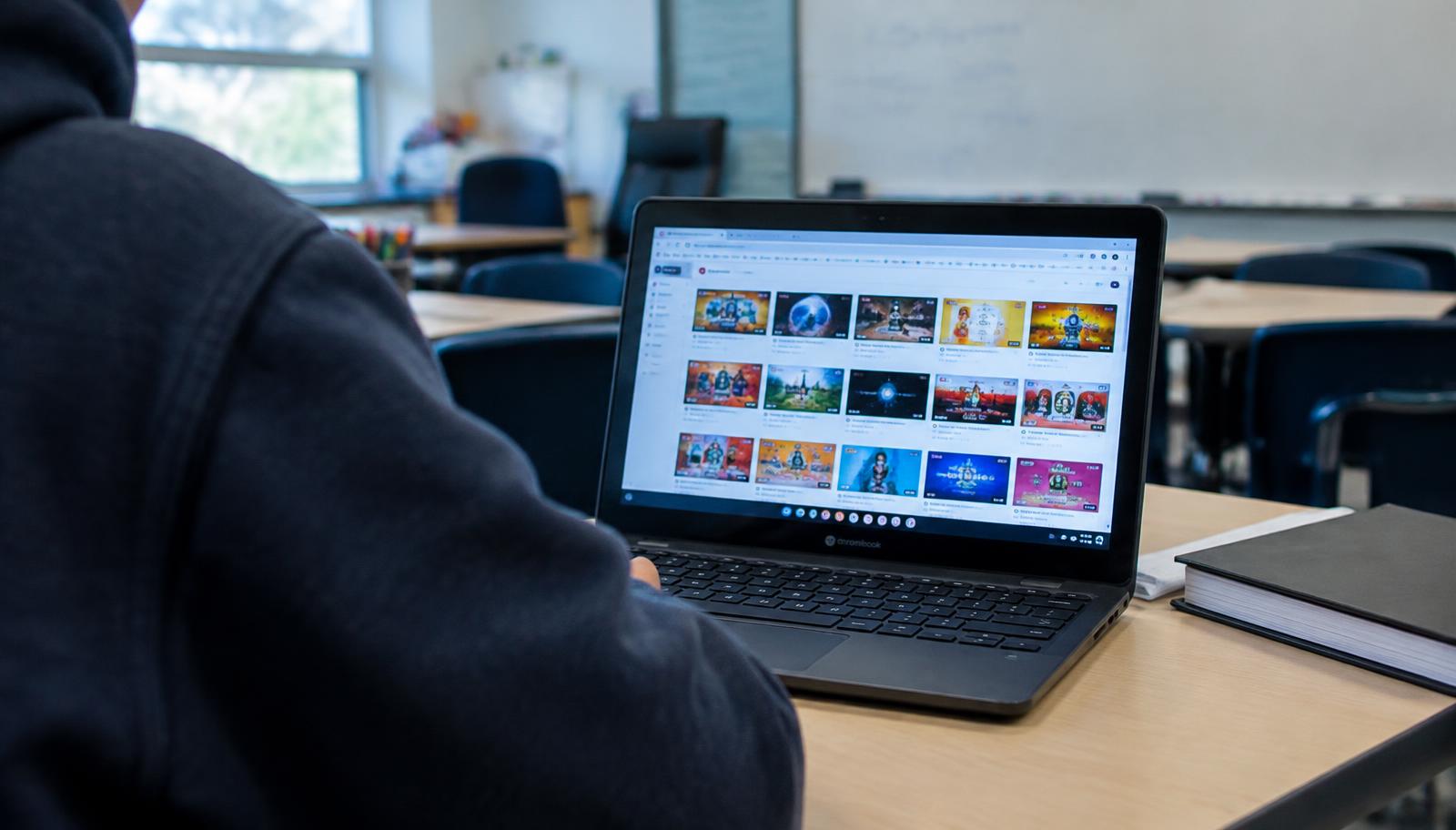
In October 2026, NBC News published "Hooked on YouTube: How video slop is infiltrating classrooms", a first-of-its-kind investigation into what children actually watch on YouTube during the school day. The answer is uncomfortable for every school that hands students a laptop each morning: of more than 17,000 videos students opened during school hours, over 95% were not educational.
Quick answer: should YouTube be blocked in schools?
For most primary and middle schools, open YouTube access does more harm than good. The NBC News data shows that when children have unrestricted YouTube on a personal school device, entertainment wins almost every time. A safer approach is not "no video ever", but teacher-chosen videos only: an allowlist of specific videos, shown on shared devices or a classroom screen, with autoplay, Shorts and recommendations out of reach.
What the NBC News investigation found
Eleven families across the US agreed to share their children's YouTube watch histories from school-issued accounts, covering students from second grade to 12th grade. Some histories ran to hundreds of pages for a single child. NBC News used a review process that transcribed and classified each video for educational value and age-appropriateness, with journalists manually checking the results.
- A second grader watched 511 videos in two months. 32 were educational.
- A sixth grader watched 2,204 videos in 11 months. 21 were educational.
- Another sixth grader watched 1,228 videos. 10 were educational.
- Seven of the eleven students spent hours of class time on non-educational content.
These are not average children, and the reporters are clear that not every student with YouTube access spends class scrolling. But the pattern is consistent: a platform designed to keep people watching does exactly that, including in a classroom.
Why school filters don't fix it
Most US districts give students their own Chromebook or laptop (a "1-to-1" programme) and rely on monitoring tools such as GoGuardian or Lightspeed. These tools can block sites and report usage, but according to NBC News, schools cannot switch off YouTube's most compulsive features: autoplay, the recommendations sidebar and YouTube Shorts. A child can open a teacher-assigned science video and, three clicks later, be deep in gaming clips or meme compilations.
Teachers notice it too. Kindergarten teacher Caitlin Lucas, writing in Fordham Institute's 2026 ed-tech Wonkathon, described spending large amounts of instructional time making sure five-year-olds weren't "attempting YouTube, clicking around aimlessly" instead of learning.
The paradox: suing YouTube while handing it to students
More than 1,000 US school districts have joined lawsuits against social media companies, including Google's YouTube, alleging their platforms are designed to be addictive and have harmed students' mental health and learning. Many of those same districts still put YouTube in front of students every day.
Documents filed in that litigation, reported by NBC News in January 2026, show Google described its work in schools as building a "pipeline of future users", with one slide noting: "You get that loyalty early, and potentially for life." Google said the documents "mischaracterize our work."
As the education group PYE put it in response to the investigation: if a school believes something is harming students, the consistent position is to remove it or tightly control it, not to keep facilitating it.
What a safer school policy looks like
Several schools and advocacy groups now recommend a stricter model. PYE's own policy is a useful starting point:
- Carts only: devices are shared and come out for a specific task, rather than every child having their own laptop all day.
- No 1-to-1 by default: personal devices are the exception, not the rule.
- "Keep it away until I say": screens stay closed unless the teacher asks for them.
- Allowlist-only videos: students can open only specific videos the teacher has approved, not YouTube as a whole.
- No screen-based "brain breaks": breaks happen away from screens.
This fits a wider shift. Los Angeles Unified has become the first major US district to require screen-time limits, and New York, Los Angeles and Washington, D.C. have all announced changes in response to growing parent pressure against tech-heavy classrooms.
What parents can do now
- Ask for the policy. Find out whether your child's school allows open YouTube access on school devices, and whether autoplay, Shorts and comments are restricted.
- Check the watch history. If your child has a school Google account, their YouTube history may be visible when signed in at home. Look at it together, without turning it into a punishment.
- Ask about devices. Does every child need a personal laptop, at every age? Shared carts and teacher-led video often work just as well.
- Separate homework from entertainment at home. Use different profiles or times for schoolwork and fun, so "I'm doing homework" and "I'm watching YouTube" don't blur together.
- Talk about how the feed works. Children aged 5–12 can understand that autoplay and recommendations are designed to keep them watching. Naming the trick makes it easier to resist.
At home, parental control tools can help with that last part. Young Minds App, for example, lets parents set study times when entertainment apps are paused, and teaches children how apps are designed to hold their attention.
Frequently asked questions
What did NBC News find about YouTube in schools?
NBC News analysed school-hours watch histories from 11 students and found that, of more than 17,000 videos opened, over 95% were not educational.
Can schools turn off YouTube autoplay and Shorts?
Not reliably. According to NBC News, schools have no way to disable addictive features like autoplay and Shorts on student accounts, which is why many experts recommend allowlisting specific videos instead.
How many school districts are suing YouTube?
More than 1,000 US school districts have joined litigation against social media companies, including YouTube, over alleged harm to students.
Is all YouTube use in class bad?
No. A teacher showing a carefully chosen video to the whole class can be valuable. The problem is open, unsupervised access on personal devices, where the algorithm rather than the teacher decides what comes next.
What age is most affected?
The investigation included children as young as second grade (age 7–8). Younger children are especially vulnerable because they have the least ability to stop an autoplay chain on their own.
Related reading
Sources: NBC News, "Hooked on YouTube" (October 2026) and "Google's work in schools aims to create a 'pipeline of future users'" (January 2026); Fordham Institute 2026 Wonkathon via Joanne Jacobs.