What Institut auf dem Rosenberg Reveals About Education in the AI Age
A Swiss school costing CHF 165,000 a year raises a bigger question: how can every child develop independent thinking in the age of AI?
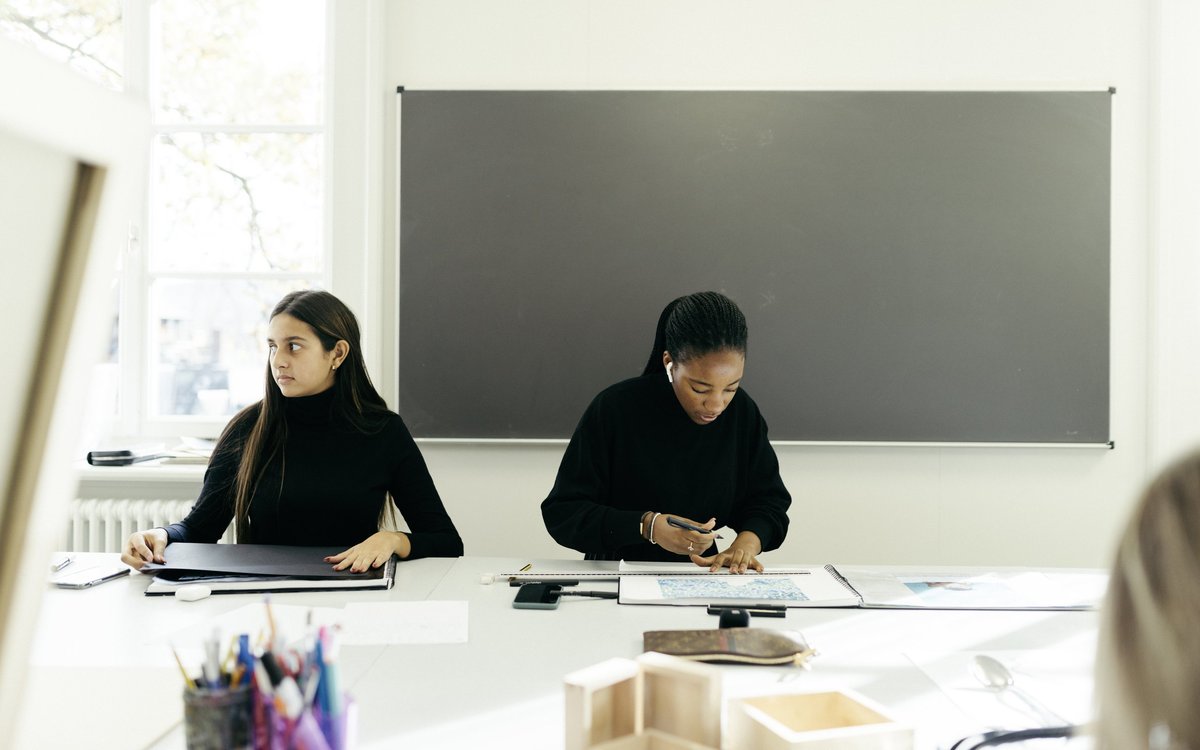
Photo: Institut auf dem Rosenberg, Academics. Classroom photograph from the institute’s official website.
By Nino Dvalidze, Founder of Young Minds App
There is a boarding school in Switzerland where the published average annual cost is CHF 165,000 per child. [1]
That number caught my attention. But what interested me more was the education behind it.
Institut auf dem Rosenberg, in St Gallen, describes a curriculum that connects subjects, offers individual learning plans and gives students opportunities to explore entrepreneurship, robotics, design and artificial intelligence. Its classes average eight students. [2][3]
As a parent and someone who has worked in education for years, I want to understand what we can learn from that approach.
Especially now, when AI can produce a convincing answer in seconds.
What are we giving children time to learn?
Rosenberg’s published curriculum includes traditional academic qualifications alongside areas such as diplomacy, leadership, biotechnology and business entrepreneurship. Its enrichment programme involves companies and outside experts. [2][3]
Those are the school’s descriptions of its provision. They do not, by themselves, prove that its students become better thinkers than children elsewhere.
But they do suggest an educational ambition I find valuable: giving children opportunities to connect what they know with situations beyond an exam paper.
Imagine a child developing a product idea. They need to decide who it is for, what problem it solves, how much it might cost and whether anyone would use it.
An answer can look good on paper and still fail when someone tries it. That gives the child something useful to investigate.
I would love more children to have time for that kind of work, alongside the knowledge and practice they need to do it well.
AI makes this question harder to ignore
I use AI every day in my business. I know how useful it can be.
But I bring experience to it. I have worked in education, built businesses and made decisions that did not work out. When a suggestion appears on screen, I have some basis for deciding whether it makes sense.
My judgement is imperfect. There are plenty of subjects where I am a beginner too. But in the areas I know, I can challenge an answer because I have something to compare it with.
Our children are still developing that understanding.
If a tool helps them complete an assignment, we need to look beyond the finished page. Can they explain the idea? Can they spot a mistake? Can they use what they have learned in a different situation?
Rosenberg includes AI in its educational offering. [3] I would not present it as an example of keeping technology away from children. What interests me is the possibility of teaching technology within a broader education that also gives students knowledge, responsibility and opportunities to make decisions.
I explored the difference between completing a task and understanding it in AI and Children’s Learning: Why Expertise Still Matters.
We should be careful about what the price tells us
A school with this budget can provide resources that most schools cannot. Eight students in a class creates possibilities very different from those available to a teacher managing thirty.
I do not want to turn an expensive school’s prospectus into a judgement on teachers working with far less.
Excellent teaching and independent thinking happen in ordinary schools every day. Nor does a high fee guarantee either of them.
The question I want to ask is which opportunities we consider essential for every child, and how we can support schools to provide them.
Time to discuss an idea. Feedback on an attempt. Access to knowledgeable adults. The chance to make something, test it and improve it.
I want these to be part of what we expect education to offer.
What families can take from this
We cannot recreate a highly resourced boarding school at the kitchen table. Parents already have enough pressure to do everything.
But there are small ways to make room for children’s thinking.
Ask how they reached an answer
“What made you think that?” can open a more useful conversation than simply checking whether an answer is correct.
If they used AI, ask which part helped and which part they questioned. Look at one claim together and work out how to check it.
Let them make something for a real person
A younger child could plan a family activity within a budget. An older child could build a simple website for a club, organise a small event or suggest a solution to a problem they notice locally.
Keep the project manageable. The useful part is having someone respond to what they have made, so they can consider what to improve.
Give them some decisions to own
Ask them to compare options, explain a choice and come back to it afterwards.
What happened? What did they overlook? What would they choose next time?
The decision can be small. They need opportunities to practise taking responsibility, with support appropriate to their age.
Allow a first attempt to be unfinished
It is tempting to step in when a child hesitates, especially when everyone is tired and the task needs finishing.
Where there is time, let them try. Then help with the part they cannot yet do. I want my children to feel that an imperfect first attempt is something they can work with.
The opportunity I want for every child
I am interested in Rosenberg because its offering prompts a useful conversation about what education can include.
But the ambition should reach far beyond families who can afford its fees.
In a world where children can generate a polished answer almost instantly, I want them to develop the knowledge to question it, the confidence to suggest something different and the ability to explain why.
That takes teaching, practice and time.
Every child deserves those opportunities. Learning to think for yourself should never be a luxury.
Sources
[1] Institut auf dem Rosenberg, School Fees. The school publishes an average annual cost of CHF 165,000, with individual costs varying. Accessed 9 November 2026. https://instrosenberg.ch/apply/fees/
[2] Institut auf dem Rosenberg, Academics. Curriculum, class sizes, qualifications and individual learning guidance. Accessed 9 November 2026. https://instrosenberg.ch/academics/
[3] Institut auf dem Rosenberg, Talent & Enrichment. Subjects and collaboration with industry experts. Accessed 9 November 2026. https://instrosenberg.ch/talent/