Phone-Free Schools in England: What the New Rules Mean for Parents
England's school phone guidance now expects no access to phones all day. What changed, the real timeline, exemptions, and questions to ask your school.
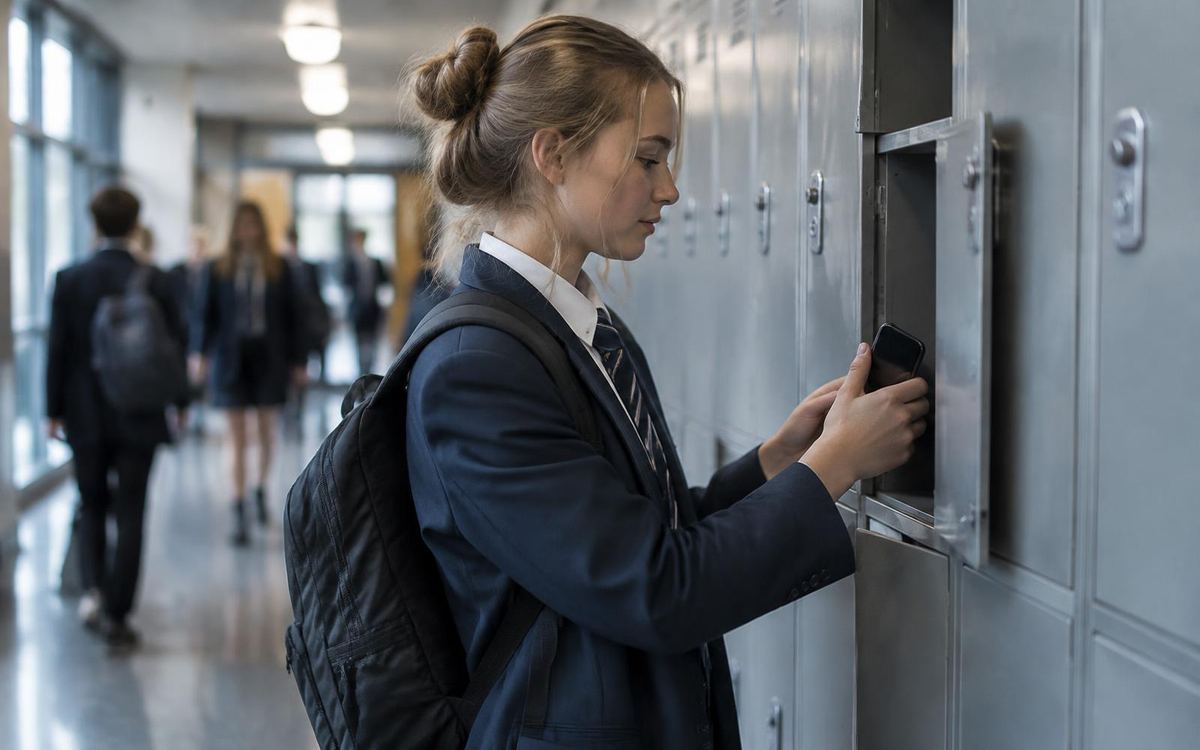
As a mother and the founder of Young Minds App, I want children to have time when they can concentrate, talk to their friends and enjoy the world around them without checking a screen.
I also understand why parents want their child to carry a phone. When they start travelling independently, knowing they can call you matters.
Both needs deserve a practical answer.
That is why the detail of England’s school phone guidance matters. A child can have a phone for the journey home while spending the school day without access to it.
For me, the bigger question is what we build around that boundary. How do we help children understand it? How do we support families after school? And how do we teach healthy habits that last when the phone is back in their hands?
What has changed?
The Department for Education’s February 2024 guidance included an option where pupils could keep their phones with them, provided they were never used, seen or heard. Schools were expected to enforce that rule consistently, with consequences for breaking it.
That could mean a switched-off phone at the bottom of a school bag. [1]
The current guidance sets a stronger expectation: pupils should have no access to their phones throughout the school day, including lessons, the time between lessons, breaks and lunch.
Headteachers decide how to implement this. The guidance gives examples such as lockers and handing devices to staff. [2]
A useful way to understand the difference is this:
A rule saying “you must not use your phone” still leaves the child with access. A system that stores it away removes that access for the school day.
Does this begin in September 2027?
The official timeline is:
| Date | What happened or is expected |
|---|---|
| January 2026 | The Department for Education published revised guidance. |
| 29 June 2026 | The guidance became statutory. |
| 1 September 2026 | Schools were expected to begin following it. |
| By September 2027 | The government has committed to review it and make any necessary revisions. |
September 2027 is a review deadline, rather than the start date for the current requirements. The House of Commons Library explains the implementation dates, and a September 2026 parliamentary answer confirms the review commitment. [3][4]
Statutory guidance also carries more weight than optional advice. The government explains that schools are expected to follow it unless there is a legally justifiable reason to depart from it. [5]
This article concerns England. Parents elsewhere in the UK should check their own government’s guidance and their school’s policy.
Why is the government taking a stronger approach?
The government’s stated aim is to reduce disruption and help schools create calmer environments for learning. In its July 2026 response to the consultation on children’s online lives, it cited findings that 58% of pupils reported unauthorised mobile device use in at least some lessons in June 2025. [5]
That figure describes reported use. It does not, by itself, prove that a particular storage system improves grades or mental health.
But it helps explain the practical concern: having a rule does not always mean phones stay unused.
One secondary school featured in the Department for Education’s case studies moved to locked pouches after noticing possible signs of hidden phone use, including more children leaving lessons. The school wanted to create a stronger barrier to checking devices. [6]
As a parent, I understand that reasoning. We ask children to manage temptation in environments where the opportunity to check is always close by.
I would rather we make the boundary clear, explain it properly and give children a real break from that decision.
Can children still bring a phone for travelling?
Yes. The guidance recognises parents’ concerns about journeys to and from school. Storage arrangements can allow children to bring a phone, put it away during the day and collect it before going home. [2]
The DfE’s case studies include locked pouches that remain with pupils until the end of the day, alongside schools using other arrangements. [6]
Parents should check the specific policy before buying a device or changing an existing one.
A school phone policy does not automatically mean a family needs a new phone. Nor does the guidance require parents to buy a particular brand of child-focused device.
What about children who need their phone?
Some children need access for a specific reason.
The guidance requires schools to consider their legal duties towards disabled pupils and children with medical conditions. It gives the example of a child using a phone with a glucose sensor to manage diabetes. Individual circumstances, including young caring responsibilities, may also require flexibility. [2]
That matters to me. A clear school boundary should include a respectful way to discuss individual needs.
If your child relies on a device, speak to the school about the purpose, when access is needed and how the arrangement will work. Children should understand their plan without feeling that they have done something wrong.
What should parents ask their school?
Before reacting to a headline, ask for the actual policy.
Useful questions include:
- Where will my child’s phone be kept, and when can they collect it?
- How should I contact my child urgently during the day?
- What happens if they need to contact me?
- How will medical, disability-related or other individual needs be considered?
- What happens if a phone is lost, damaged or not handed in?
- Which other devices are covered?
The DfE’s parent communication guidance encourages schools to involve families and pupils, explain changes in advance and work directly with parents where adjustments are needed. It also recommends reassuring parents that urgent messages can go through the school office. [7]
At home, I would keep the conversation simple:
“Your phone is there for the journey. During school, it gets put away so you can focus and spend time with people. Let’s make sure you know how to reach me if you need help.”
The explanation matters as much as the instruction.
What happens when the school day ends?
This is where I believe the conversation needs to go further.
The phone comes back. Homework still needs doing. Friends are messaging. A game is waiting. Bedtime arrives.
I want school boundaries to be part of a wider approach that helps children practise managing technology.
For families, that might mean agreeing when phones are available, protecting time for homework and sleep, and making room for activities children enjoy away from a screen.
It also means keeping trust open. If something upsetting happens online, I want my child to tell me, even if they were using an app we had already discussed.
A child should know that asking for help comes first.
My perspective as the founder of Young Minds App
I built Young Minds App around the belief that children need preparation as well as protection.
Our approach brings together safety controls, routines and learning to help families introduce technology with clearer boundaries and more conversation.
School Mode can support a family’s routine, but families should follow their school’s storage and access requirements. An app setting should never be presented as automatic compliance with a school policy.
For me, the opportunity is to connect what happens at school with what happens at home.
We can support a phone-free school day and still take responsibility for helping children build judgement, confidence and healthy habits outside school.
That is the future I want us to work towards: children who have space to grow, parents who feel supported, and technology introduced with care.
Sources
- Department for Education: mobile phones in schools, February 2024
- Department for Education: current mobile phones in schools guidance
- House of Commons Library: mobile phones in schools in England
- UK Parliament: written answer, 11 September 2026
- Government response: Growing up in the online world, July 2026
- Department for Education: school case studies
- Department for Education: communicating school phone policies to parents