Meta, Jonathan Haidt and the Fight Over Children's Online Safety
Newly revealed Meta documents show discussions about discrediting Jonathan Haidt. Young Minds App founder Nino Dvalidze asks what this means for children's safety.
A founder's note
I read something in The Times today that genuinely made me angry. As a mum of two and the founder of Young Minds App, I want to share why this story matters for every family, and what I think needs to change.
What happened?
On 28 October 2026, The Times reported on internal Meta notes from March 2023, now disclosed through US court cases about social media and children's safety.
According to the documents, Meta staff discussed ways to undermine Jonathan Haidt, the psychologist who has spent years warning about social media's impact on children's mental health. Just think about that for a moment. A researcher raises serious concerns about children's wellbeing, and inside one of the world's most powerful tech companies, people discuss how to undermine his credibility.
This was before his bestselling book The Anxious Generation came out in 2024.
The notes reportedly suggested:
- Turning other academics against Haidt.
- Encouraging criticism of his research through academic and media channels.
- A quiet, behind-the-scenes "whisper strategy".
- Persuading researchers to distance themselves from his conclusions.
An important detail: the documents show ideas being discussed. They do not prove Meta actually carried out a campaign. One academic named in the coverage, Andrew Gelman, says Meta never contacted him.
This isn't the first time
The story fits a pattern parents should know about:
- 2021: whistleblower Frances Haugen shared internal research showing Meta knew Instagram made body image worse for some teenage girls, as reported in The Wall Street Journal's "Facebook Files".
- 2023: the US Surgeon General warned there is not enough evidence to say social media is safe for children and teens.
- 2023: more than 40 US states sued Meta, alleging it designed features that hook young users. Those cases are part of why internal documents like these are now surfacing.
- 2025: the UK's Online Safety Act children's safety duties came into force.
What the research says, and doesn't
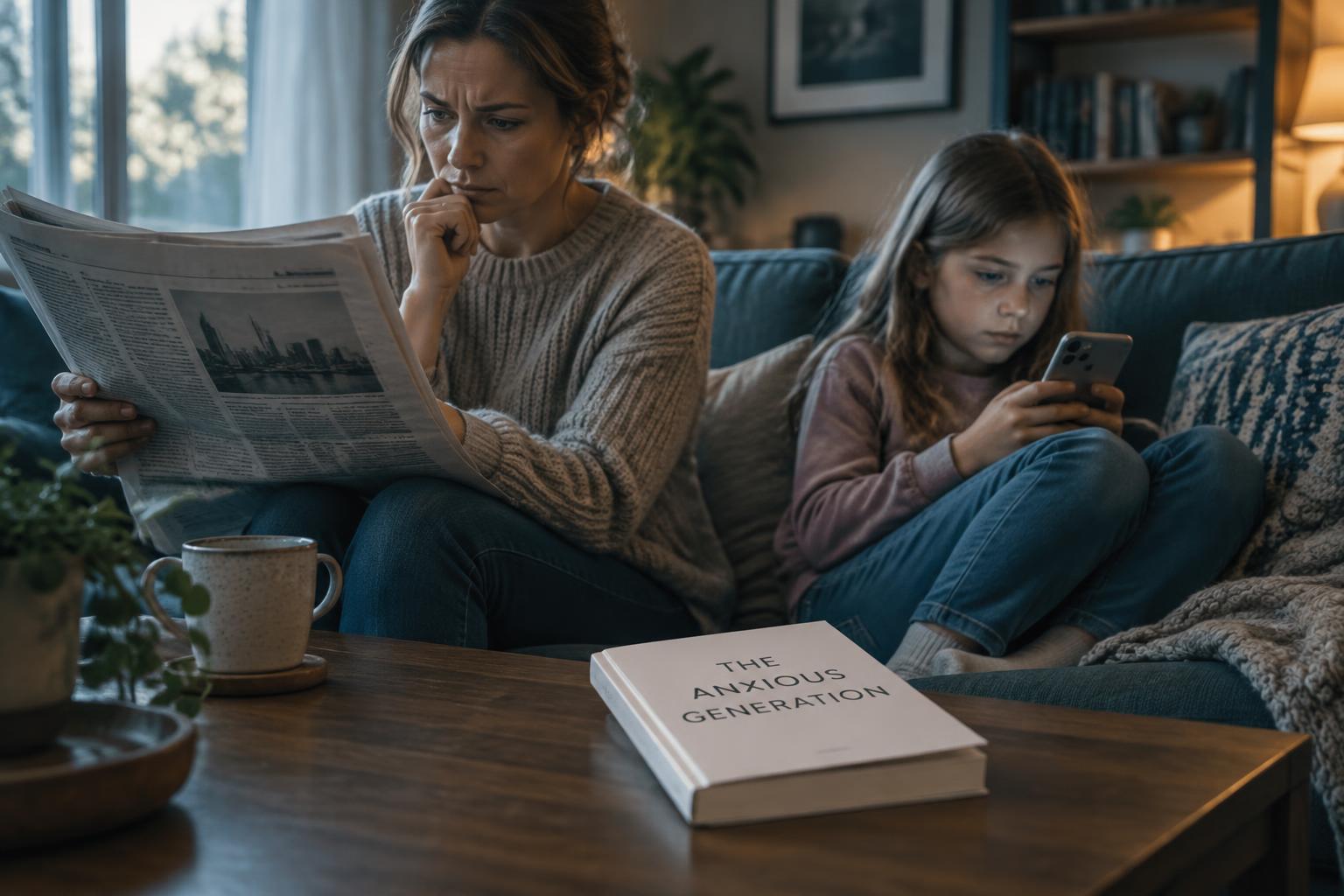
In The Anxious Generation, Haidt argues the move from a "play-based childhood" to a "phone-based childhood" in the early 2010s helped drive a rise in teen anxiety and depression. He proposes four norms: no smartphones before secondary school, no social media before 16, phone-free schools, and more independence and free play.
Not every researcher agrees. Psychologist Candice Odgers, writing in Nature, argued the evidence mostly shows correlation, not cause, and warned that blaming phones could distract from other pressures on young people.
As a parent, I take two things from this. The science is still developing. And the companies holding the most data about children's behaviour are the ones least willing to share it.
Why this worries me as a parent
Researchers disagree about how strong the evidence is linking social media to children's mental health. That debate is healthy, and it should happen in the open.
But that is exactly my point. We should be encouraging independent research into children's safety, not discussing how to turn researchers against each other.
These are real children. Mine, yours, their friends and classmates. Children growing up in a digital world that adults built for them.
Not every mental health problem comes from social media. Childhood is complicated. But we already know some online experiences cause real harm.
This month, Ofcom reported that most UK children see at least one piece of harmful content in a four-week period. It also found no significant overall drop in exposure in the first nine months after new child-safety rules came in.
That should be a wake-up call.
The bigger question
I don't think every tech company is the enemy. I'm building one myself, and I believe technology can make children's lives better. They can learn, create and discover things we never could.
But innovation cannot come at any cost. When a business depends on capturing attention, we have to ask:
- Are products designed around what's good for children, or around keeping them hooked?
- When independent researchers raise concerns, is anyone listening?
These questions matter far more than any PR battle.
Parents shouldn't fight this alone
We ask parents to manage screen time, block harmful content, teach digital skills and keep up with apps that change every month. Usually while working and running a home. And the technology changes faster than most of us can follow.
Parents have an important role. But it can't be theirs alone.
| Who | What they need to do |
|---|---|
| Tech companies | Design safer products from day one and share what their own research shows |
| Regulators | Hold platforms accountable and give researchers real access to data |
| Schools | Teach digital literacy and media skills |
| Parents | Set calm routines and keep talking with their children |
| Children | Learn why boundaries matter, so they can make good choices themselves |
What needs to change
- More independent research, with proper data access and no pressure from the companies being studied.
- Real transparency about how platforms affect children, including internal findings.
- Safety by design, built in from the start, not patched after a scandal.
- Listening to children and parents, not just executives, policymakers and academics.
Children are the ones living with the consequences of these decisions.
What you can do today
- Keep social media apps off devices for younger children.
- Agree simple daily limits and screen-free time together.
- Talk regularly about what they see online, without judgement.
This is the thinking behind Young Minds App: introduce technology gradually, build healthy routines and help children understand why boundaries matter. Protect them today. Prepare them for tomorrow.
It costs less than a coffee a month on the yearly plan, with a 7-day free trial.
Download on the App Store · Get it on Google Play
My final thought
What troubles me most isn't whether Jonathan Haidt is right about every detail. Science should always be questioned.
It's the possibility that children's wellbeing can become a battle over reputation. Our children don't get another childhood while we spend years debating who is right.
How much more do we need to see before children's wellbeing matters more than protecting a company's reputation?
Nino Dvalidze, Founder & CEO of Young Minds App